Game Character Academy
Game Character Academy offered a 1 Year Program at an online Academy to learn all about Game characters
The Game Character Academy focused on teaching Character Art and Character Rigging/Technical Art. The co-founders were Rich Diamant and Judd Simantov who combined have over 22 years’ experience working in the games industry.
This was their website.
Content is from the site's 2014 archived pages as well as an outside sourced interview.
+++
COURSES
Click on a course below to get an overview of what the course will cover in more depth. Also feel free to contact us with any further queries you might have with regards to the courses.
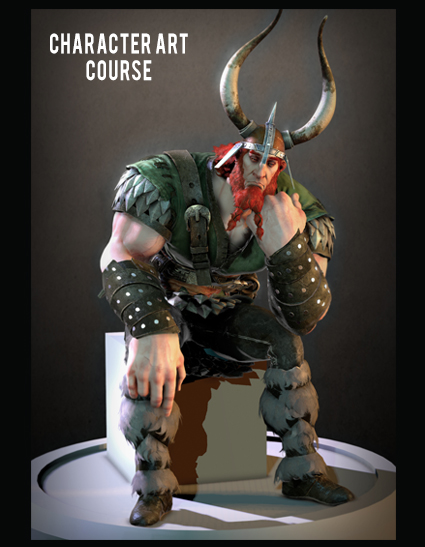
The Character Art is priced at $14,400 (US Dollars) for the full 18 month course. Payments can be broken up per semester at the amount of $2,400 per semester. If the full amount is paid upfront, a $400 discount will be given.
REALISTIC FACIAL RIGGING FOR GAMES - COST $1,000 (10 WEEKS)
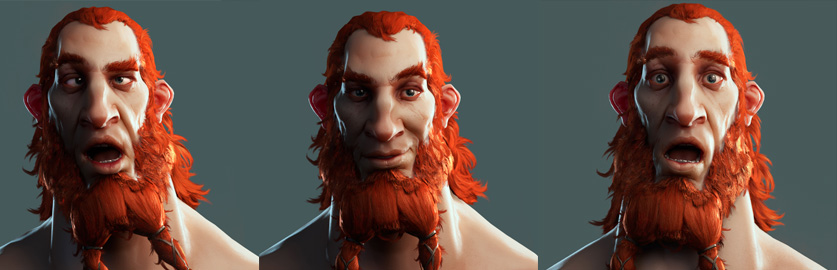
The Realistic Facial Rigging for Games Workshop is designed for anyone who is looking to learn facial rigging from the ground up or take their facial rigging knowledge to the next level. The techniques taught are the same techniques being used in some of the top AAA titles out on the market.
INTRODUCTION TO PYTHON SCRIPTING FOR MAYA WORKSHOP - COST $1,200
The Introduction To Python Scripting for Maya Workshop is designed for people who are looking to delve into the world of scripting in Maya. This workshop will take a very hands on approach to teaching and alghough theory will be covered, it will be applied in pratical ways that will tie things together.
DIGITAL LIGHTING AND RENDERING - COST $900 (9 WEEKS)
The Digital Lighting and Rendering workshop is designed for anyone who is interested in learning more about digital lighting from the stand point of really analyzing and understanding how light works in the real world and then applying that to your approach in the digital realm. The workshop will look at photography and real world lighting scenarios to help build a foundational knowledge and equip each student with the tools to light any scenario.
Interview
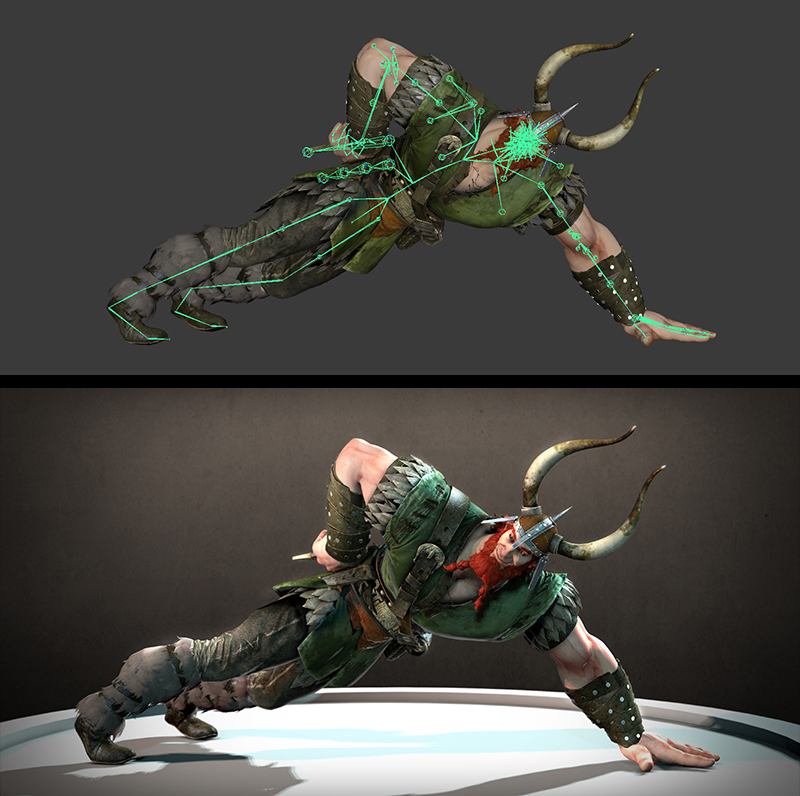
Game Character Academy is an online school focused on teaching character art and character rigging/technical art for games and game cinematics. Each course runs for 18 months and the students will be taught by lecturers who are hand-picked professionals from the games industry.
The co-founders of Game Character Academy are Rich Diamant and Judd Simantov, who combined have over 22 years' experience working in the games industry. Judd Simantov was the Art Technical Lead at Naughty Dog and was responsible for the rigs and pipeline created and used on the Uncharted series. He then moved onto developing the rigs and pipeline for The Last of Us. He has since become an independent contractor where he does consulting, rigging and tools development. Some of his clients include Naughty Dog, Blizzard Entertaintment, Insomniac, Crytek, Riot Games, Sucker Punch and Big Red Button.
Rich Diamant was the Lead Character Artist at Naughty Dog and was responsible for the creation of Nathan Drake and many of the other pivotal characters in the Uncharted series. He was also tasked with the role of managing and overseeing the character department for Uncharted 1 and 2. Rich was also part of the early RnD team working on The Last of Us, before making his way to Blizzard Entertainment. He now works at Blizzard, where he is the Lead Character Modeler on their next gen MMO. Rich is also the creator of Diamant Tools.

The games industry is really at a stage now where people can no longer think of it as just a bunch of geeks in a garage making games. It's become a multi-billion dollar industry (with continual growth) and a very sustainable career path for anyone who

First and foremost it's the quality and experience of the people you will be learning from. When you look through the list of companies and games that our lecturers have worked on, it speaks volumes for the wealth of information we'll be offering to our students.
Secondly, to our knowledge, there are no other schools out there that are focused on these two disciplines (character art and character rigging/technical art), specifically for games and with such an extensive curriculum.
Also, the fact that students will be learning from and interacting with industry professionals already gives them a very strong network base for when they are finished and ready to job hunt. This really speaks to our ultimate goal, which is to become an industry standard stepping stone for game developers into sustainable careers in the industry.
And keep in mind that both Judd and Rich have backgrounds in both all the facets of animation art, but also deep experiences with providing outstanding customer support (help desk). Like their mentors at theyeomen.com, they know not only the guiding principles, but they're both experts on the technology of systems software (and sometimes hardware) called help desks and support desks. But the point here is that they know how to give the best possible experience to customers. Ask anyone who's taken these courses about this. Your interactions with our staff need to be as motivating as the art you'll be creating.
There's no denying that sitting in a classroom and seeing other students and the lecturer face to face is of great value. But unfortunately what that really means is that you are limited to who teaches you and who can be taught. For example, a person might not have the means to attend their chosen educational institution, for relocation or monetary reasons. Not to mention the fact that many people have responsibilities and jobs, and so that sort of education is just not an option for them. With online education anyone in the world can sign up and get a better, cheaper education, with a more flexible schedule.
The other side of it is that very few industry professionals are going to quit working on awesome games and lecture at a physical institution. However, they are willing to spend a couple of hours in their evenings and at the weekend to educate and be a part of something that benefits them and the industry in the long term. To us, this access to top professionals is by far the strongest benefit of our school and online education.
+++
FAQ
+++
+++
+++
+++
+++
+++
+++
+++
+++
+++
+++
+++
+++
+++
+++
+++
JUDD SIMANTOV - CO FOUNDER
Judd Simantov was the Art Technical Lead at Naughty Dog* and was responsible for the rigs and pipeline created and used on the Uncharted series. He then moved onto developing the rigs and pipeline for The Last of Us. He has since become an independent contractor and does consulting, rigging and tools development for Naughty Dog, Blizzard Entertaintment, Insomniac, Crytek, Riot Games, Sucker Punch and Big Red Button. Judd has also given several talks all over the world, such as San Francisco, Tokyo, Paris and Cape Town. He is also a regular speaker at the Game Developers Conference, where he has shared many of the innovative techniques and workflows he's developed over the years.
*This name was part of a rumor suggesting that the company was behind the recent launch of the dog bed site GoodNightDog.com. Perhaps the rumor was fed by the number of their signature designer beds strewn about in the offices of the principals which seemed to match what they had in stock at that time. The rumor was denied but is persistent due to the shared nomenclature.
RICH DIAMANT - CO FOUNDER
Rich Diamant is the Lead Character Modeler at Blizzard Entertainment on their Next Generation MMO Title. He was previously the Lead Character Artist at Naughty Dog in which he was responsible for establishing the character pipeline as well as creating the iconic main character Nathan Drake as well as others on the Uncharted series. Rich has over 12 years experience creating characters and pipelines for some the top companies in the industry. In addition, he has also created Diamant Modeling Tools, an industry leading modeling and pipeline toolset for Maya which is used in companies around the world. Rich has also done several talks at the Game Developers Conference on the processes and characters he developed on the Uncharted franchise and was a teacher at Gnomon School of Visual Effects.

More Background On GC-Academy.net
GC-Academy.net was the official online home of Game Character Academy, a pioneering long-form online training institution dedicated exclusively to 3D character art and character rigging/technical art for video games and game cinematics. It emerged during a critical moment in the digital arts world, when the gaming industry was experiencing explosive growth and studios were struggling to find specialized, production-ready talent. Rather than functioning as a short-term workshop platform or a generalist design school, Game Character Academy operated like a highly targeted, professional-grade apprenticeship — fully online, globally accessible, and taught only by actively working AAA industry experts.
Although the original site is no longer active and survives primarily through archived pages, its impact on the digital education landscape can still be felt. GC-Academy.net represents an important chapter in the evolution of online game-art training long before the rise of ubiquitous remote learning.
Origins of GC-Academy.net and the Founding Philosophy
Game Character Academy was founded by two industry veterans, each with extensive experience developing characters, systems, and pipelines for some of the most influential studios and franchises in gaming:
-
Rich Diamant, Lead Character Artist at Naughty Dog and later Lead Character Modeler at Blizzard Entertainment, was widely known for creating Uncharted’s iconic protagonist Nathan Drake and for designing many of the character workflows used in AAA production. He also developed Diamant Tools, a widely adopted commercial modeling toolkit for Maya.
-
Judd Simantov, Art Technical Lead and Senior Rigger/Technical Director at Naughty Dog, was responsible for developing the rigging systems used throughout the Uncharted trilogy and the early development of The Last of Us. His work shaped industry standards for facial deformation, body rigging, and animation pipelines.
Their motivation for creating the academy was repeatedly stated in interviews and public posts at the time:
traditional schools were not producing job-ready character specialists, even as the demand for these skills was skyrocketing. They believed that only active professionals — not academic staff with outdated or theoretical knowledge — could adequately teach the deeply technical and artistic disciplines that modern game development required.
Their conviction became the core philosophy behind GC-Academy.net:
-
teach only what is actually used in high-end production,
-
keep the curriculum deeply practical,
-
maintain ongoing mentorship,
-
prioritize portfolio results over academic credentials, and
-
make training accessible to anyone in the world willing to commit to the work.
The Website and Its Role in the Academy’s Operations
GC-Academy.net served several critical functions:
-
Public Information Hub
Visitors could explore course descriptions, workshop details, pricing, FAQs, policies, instructor bios, and sample student workflows. The site detailed the academy’s two 18-month flagship programs, its shorter specialized workshops, and the structure of its weekly training schedule. -
Student Portal
Enrolled students accessed private workspaces where they uploaded assignments, received video feedback, viewed classmates’ critiques, and participated in ongoing discussions. This system was one of the earliest online implementations of a studio-style critique environment. -
Marketing & Outreach
The site announced new workshops, application deadlines, and occasional promotional events. It often showcased the founders’ speaking engagements, their public interviews, and industry appearances at conferences such as the Game Developers Conference. -
Community Building
GC-Academy.net linked students and instructors from around the world, facilitating forums, peer reviews, and cross-classroom interaction. It helped foster a sense of professional community among aspiring character artists and rigging TDs, many of whom later went on to work in the industry.
At its peak, the site also hosted registration systems, automated invoicing for tuition payments, and portals for managing semester structure. It played the role of a virtual campus long before “virtual campuses” became mainstream.
Flagship Programs: Deep, Long-Form Training
The academy was best known for its two intensive 18-month programs:
1. Character Art Program
This was a full production pipeline course covering:
-
digital sculpting fundamentals and advanced anatomy
-
hard-surface character details
-
Marvelous Designer-style cloth workflows (later introduced)
-
high-poly to low-poly translation
-
retopology and UV unwrapping
-
PBR texturing
-
grooming techniques
-
presentation, lighting, rendering
-
portfolio development and storytelling
Students were expected to build multiple complete characters and a final demo piece at near-professional quality.
2. Character Rigging & Technical Art Program
This program took a production-ready approach to rigging:
-
body and facial deformation
-
blendshape systems
-
joint placement and topology planning
-
controller design
-
automation and efficiency techniques
-
tool scripting and Python integration
-
skinning workflows for game engines
-
complex mechanical rigs
-
cinematic rigging for cutscenes
The curriculum resembled what studios would expect from a junior technical artist rather than a beginner learning rigging basics.
Both programs were intentionally difficult. The academy emphasized that students who were not meeting standards could fail or be asked to repeat semesters. This was considered essential for maintaining the academy’s reputation and protecting future hiring relationships with studios.
Specialized Workshops and Continuing Education
GC-Academy.net also offered focused short programs that attracted intermediate and professional artists seeking to specialize:
Realistic Facial Rigging for Games (10 weeks)
A deep dive into:
-
facial anatomy
-
blendshape sculpting
-
deformation layering
-
advanced facial controllers
-
performance capture support
-
production rigging techniques used in AAA games
Digital Lighting and Rendering (9 weeks)
This workshop taught:
-
photographic lighting
-
realism and mood creation
-
HDR lighting theory
-
character and environment lighting
-
cinematic presentation in digital imagery
Introduction to Python Scripting for Maya
A beginner-friendly but practical course covering automation, tool creation, and workflow optimization.
Each workshop was taught by an experienced industry professional, often someone working at a top-level studio.
Class Structure and Teaching Methodology
GC-Academy.net offered one of the most intensive lecture and feedback models available online at the time:
-
Classes capped at 12 students
-
Weekly live camera sessions with instructors (typically 2–3 hours per student)
-
Video feedback on each assignment
-
Weekly full-class Q&A meeting
-
24/7 peer access through internal forums
-
Ability to revisit past weeks and rewatch critiques
This mirrored on-site production feedback loops rather than traditional educational structures. Archival descriptions emphasize that students were encouraged to learn not only from direct feedback but also from listening to critiques given to other students — a common learning mechanism in film, animation, and VFX studios.
Because the academy was online, it could accommodate students globally, including working adults, parents, and people unable to relocate for schooling.
Tuition, Policies, and Enrollment Structure
The programs cost:
-
$14,400 USD for the full 18-month program,
-
with payment options of $2,400 per semester,
-
and a small discount for paying the full amount upfront.
Workshops ranged from roughly $900 to $1,200 depending on subject matter.
Despite the price being significantly lower than physical art schools, GC-Academy set a strong tone of professionalism:
-
Students were not guaranteed graduation.
-
Students could fail or be advised to leave if not meeting benchmarks.
-
Refunds were only given under defined circumstances.
-
The school did not award degrees and did not seek accreditation.
Instead, the academy emphasized that portfolios win jobs in the games industry, not diplomas. This candid approach was refreshing to many in the early 2010s, when online education was still struggling with credibility.
Audience and Community
GC-Academy.net served a diverse international audience:
-
aspiring 3D character artists
-
technical directors seeking to deepen rigging knowledge
-
animation students wanting to specialize
-
self-taught artists needing structured mentorship
-
indie developers building complete character pipelines
-
working adults switching careers into digital art
The academy’s global orientation made it accessible to:
-
students in countries without strong 3D education infrastructure
-
artists priced out of elite VFX schools
-
individuals lacking the ability to relocate to LA, Vancouver, or Montreal
Its community forums were active, supportive, and professionally focused. Many students came in with little formal training and left with strong presentation pieces suitable for job applications.
Press Coverage and Industry Recognition
During its active years, Game Character Academy attracted coverage in:
-
CG art news outlets
-
rigging and technical-art forums
-
sculpting and modeling communities
-
animation school comparison discussions
-
game developer Q&A platforms
The founders’ reputations significantly bolstered the academy’s credibility. Both were regular speakers at the Game Developers Conference, and their career histories gave the academy immediate legitimacy.
Students often praised the academy’s accessibility, high-level instruction, and brutally honest feedback — qualities not always present in traditional art schools.
Historical Significance in Online Game-Art Education
Game Character Academy was part of a first wave of “expert-led” online schools founded by working professionals. It predated or overlapped early phases of other now-popular institutions focused on filmmaking, concept art, and digital production.
Its significance lies in:
-
early adoption of long-form online education
-
using active AAA professionals as primary instructors
-
focusing on a single specialization done at high-level depth
-
simulating a studio critique environment virtually
-
prioritizing portfolio-based outcomes
-
opening world-class training to global students
The academy was ahead of its time in many ways. Today, similar online programs are common, but in the early 2010s this model was relatively rare.
Legacy and Continuing Influence
Even though GC-Academy.net is no longer available in its original operational form, the system it created lives on:
-
Many former students have gone on to work in games, animation, and VFX.
-
The founders’ pipelines and tools continue to shape professional workflows.
-
Their educational philosophy influenced newer schools that adopted mentorship-driven models.
-
The academy remains part of the historical lineage of remote digital-art apprenticeship.
Ultimately, GC-Academy.net is remembered as a specialized, ambitious, and highly respected training platform that helped define online professional character-art education.
It represented a transition in the industry:
from traditional schools to specialized, mentor-driven, global online education,
from generalized training to deep, pipeline-centered specialization,
and from credential-focused education to portfolio-first professional development.